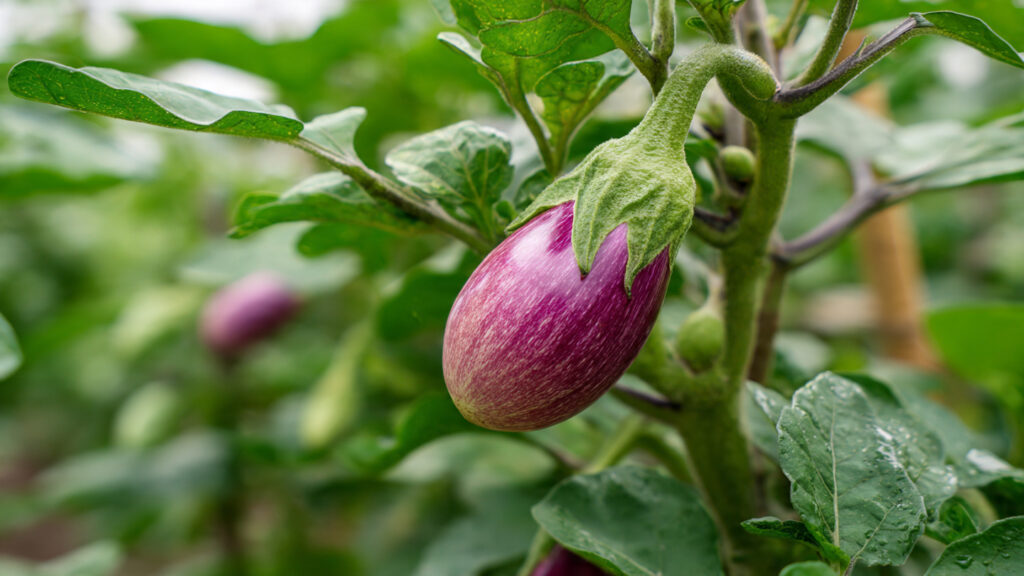
Eggplant is a favorite vegetable in many home gardens thanks to its glossy fruits, rich flavor, and versatility in cooking. However, gardeners often face challenges such as soil-borne diseases, weak root systems, poor yields, and inconsistent growth. One powerful yet surprisingly simple solution is grafting.
Grafting eggplant may sound like an advanced horticultural technique, but it’s becoming increasingly popular among home gardeners and small-scale growers. By combining a strong root system with a productive fruiting variety, you can dramatically boost growth, increase yields, and improve disease resistance—all without complicated equipment.
In this detailed guide, you’ll learn how grafting eggplant works, why it’s beneficial, and how you can easily do it at home for healthier and more productive plants.
What Is Eggplant Grafting?
Eggplant grafting is the process of joining the top part (scion) of a desirable eggplant variety with the root system (rootstock) of a different, stronger plant. The eggplant most commonly grown in home gardens is Solanum melongena.
The rootstock is chosen for its vigor, disease resistance, and adaptability to challenging soil conditions. Once grafted successfully, the plant behaves as one unit: the top produces fruit while the bottom provides a powerful root system.
Why Graft Eggplant?
Grafting offers several significant advantages:
1. Improved Disease Resistance
Many soil-borne diseases, such as bacterial wilt and Fusarium wilt, attack the roots. Using a resistant rootstock protects the plant from these common threats.
2. Stronger Root System
A vigorous rootstock absorbs water and nutrients more efficiently, resulting in stronger stems and larger plants.
3. Higher Yield
Because the plant experiences less stress and has better nutrient uptake, it often produces more flowers and fruits.
4. Extended Growing Season
Grafted plants are more resilient to environmental stress, allowing them to produce for longer periods.
5. Better Performance in Poor Soil
Even in less-than-ideal soil, grafted eggplants can thrive thanks to the enhanced root system.
Best Rootstocks for Eggplant Grafting
The key to success lies in choosing the right rootstock.
Some gardeners use hardy wild relatives of eggplant or disease-resistant varieties. In many regions, growers use specific rootstock varieties bred for strength and resistance to soil pathogens.
Characteristics of good rootstock:
- Resistant to wilt diseases
- Strong, thick stem
- Fast root development
- Adaptable to local climate
Make sure the rootstock and scion stems are similar in thickness at the time of grafting for best results.
➡️ How to Grow Malabar Spinach from Cuttings for Fast, Easy Greens
➡️ How to Grow Super Delicious Cabbage at Home Without a Garden
➡️ How to Grow Bean Sprouts at Home in Plastic Bottles Easily (Step‑by‑Step Guide)
➡️ Why is Your Lemon Tree Blooming in the Heart of Winter?
➡️ Why Should Your Garden Have a Dedicated Pollinator Highway?
➡️ Why Do Your Fruit Trees Need a Winter Wash to Thrive in Spring?
➡️ How Can Rice Water Transform Your Fruits into Sweeter Delights?
➡️ Jumpstart Your Winter Garden: Seed Starting Under Lights
When to Graft Eggplant
Timing is important.
- Start rootstock seeds 5–7 days before scion seeds.
- Graft when both plants have 2–4 true leaves.
- Stems should be about 2–3 mm thick.
Plants that are too young may be fragile. Plants that are too mature may not fuse properly.
Tools You’ll Need
Eggplant grafting requires only basic tools:
- Sharp razor blade or grafting knife
- Grafting clips or small silicone tubes
- Clean water spray bottle
- Transparent plastic dome or bag
- Sterilizing solution (alcohol)
Always sterilize tools before cutting to prevent infection.
Easy Grafting Method: The Splice Graft Technique
One of the simplest and most effective methods for home gardeners is the splice graft (also called tube graft).
Step 1: Cut the Rootstock
Cut the rootstock stem at a 45-degree angle about 1–2 inches above the soil line. Discard the top portion.
Step 2: Cut the Scion
Cut the scion stem at the same 45-degree angle. Ensure the cut surfaces match closely.
Step 3: Join the Pieces
Align the cut surfaces so they fit snugly together. The cambium layers (just under the outer skin) must touch for successful fusion.
Step 4: Secure with Grafting Clip
Use a small clip to hold the two pieces firmly together.
Step 5: Place in Healing Chamber
Immediately move the grafted plant to a humid, shaded environment.
The Healing Process
Healing is the most critical stage.
Ideal Conditions:
- High humidity (85–95%)
- Warm temperature (22–28°C / 72–82°F)
- Low light for the first 2–3 days
You can create a simple healing chamber using:
- A plastic storage box
- A mini greenhouse
- A large transparent bag over a tray
Mist lightly to maintain humidity, but avoid excessive condensation.
After 5–7 days, gradually increase light exposure. By 10–14 days, the graft union should be strong.
Signs of Successful Grafting
You’ll know your graft has taken if:
- Leaves remain firm and green
- New growth appears
- The graft union looks sealed
- The plant stands upright without support
If the scion wilts severely within the first few days, the graft likely failed.
Transplanting Grafted Eggplants
Once healed:
- Remove grafting clips carefully.
- Harden off plants gradually.
- Transplant into garden or containers.
Important: When planting, ensure the graft union stays above the soil line. If buried, the scion may develop its own roots, defeating the purpose of grafting.
Growing Conditions for Maximum Success
To fully benefit from grafting:
1. Provide Full Sun
Eggplants need at least 6–8 hours of sunlight daily.
2. Maintain Consistent Watering
Even though rootstocks are stronger, consistent moisture promotes fruit development.
3. Feed Moderately
Use balanced fertilizer every 3–4 weeks. Avoid overfeeding nitrogen.
4. Prune Lightly
Remove excessive lower leaves to improve airflow.
Common Mistakes to Avoid
1. Poor Alignment
If cambium layers don’t align, the graft won’t heal.
2. Low Humidity During Healing
Dry air can cause scion wilting and failure.
3. Burying the Graft Union
Always keep the graft point above soil.
4. Using Weak Rootstock
Choose vigorous, disease-resistant plants for best results.
Benefits Compared to Non-Grafted Eggplants
| Feature | Non-Grafted | Grafted |
|---|---|---|
| Disease Resistance | Moderate | High |
| Root Strength | Standard | Strong |
| Yield | Good | Higher |
| Stress Tolerance | Average | Improved |
| Lifespan | Normal | Extended |
Many gardeners report significantly increased fruit production from grafted plants, especially in soils with previous disease problems.
Is Grafting Worth It for Home Gardeners?
Absolutely. While it requires a little practice, grafting can dramatically improve plant performance. If you’ve struggled with wilt, low yields, or weak plants in the past, grafting could transform your eggplant harvest.
Even beginners can master this technique with a few attempts. Once learned, it opens doors to grafting other crops like tomatoes and peppers as well.
Final Thoughts
Grafting eggplant is a powerful and practical technique that boosts growth, increases yield, and strengthens disease resistance. By combining the best qualities of two plants—vigorous roots and productive tops—you create a superior plant capable of thriving in challenging conditions.
With simple tools, proper timing, and careful healing, you can successfully graft eggplants at home and enjoy healthier plants and heavier harvests. Whether you garden in containers, raised beds, or traditional soil, this great idea can significantly improve your growing results.