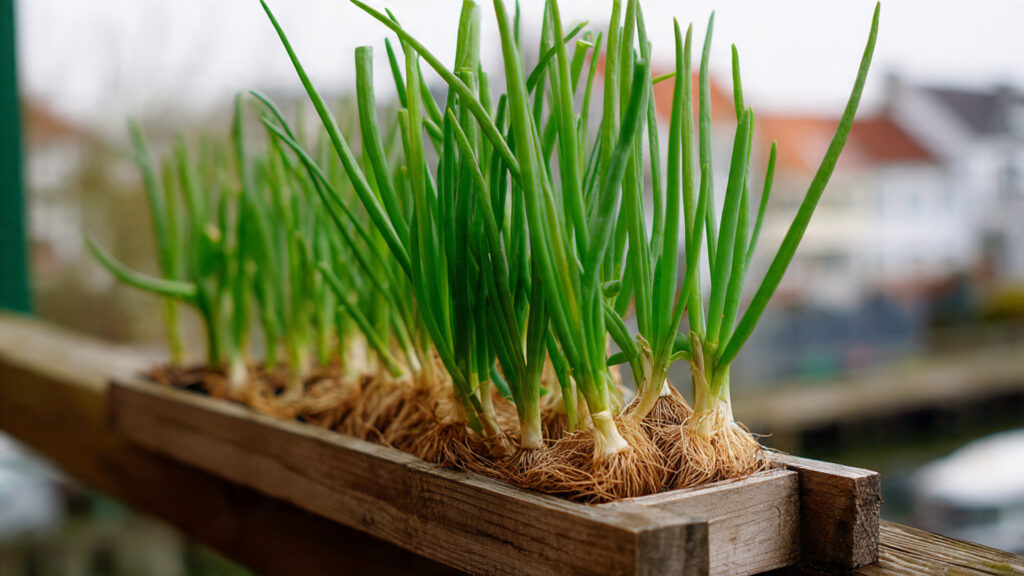
Green onions, also known as scallions or spring onions, are among the most versatile and rewarding plants to grow at home. They are easy to cultivate, packed with nutrients, and can be harvested repeatedly, making them ideal for small-space gardeners. With the right techniques, you can grow green onions year-round on your balcony using simple containers, ensuring a constant supply of fresh, flavorful additions for your meals.
In this detailed guide, we’ll explore how to grow green onions in containers, the best soil and care practices, and tips for maximizing yields throughout the year.
Why Grow Green Onions at Home?
Growing your own green onions has several advantages:
- Freshness – Homegrown onions have superior flavor and aroma compared to store-bought varieties.
- Year-Round Harvest – Green onions can grow continuously if cared for properly, giving you a steady supply.
- Space Efficiency – Ideal for balconies, patios, and small urban gardens.
- Cost-Effective – Save money by regrowing from kitchen scraps or seeds.
- Health Benefits – Rich in vitamins A, C, and K, antioxidants, and dietary fiber.
Green onions are also resilient and require minimal maintenance, making them perfect for beginner gardeners.
Choosing the Right Containers
Container selection is key to success, especially on a balcony where space may be limited.
Container Size
- Minimum depth: 6–8 inches for proper root development.
- Width: 6–12 inches for several onions per container.
- Ensure drainage holes to prevent waterlogging.
Container Types
- Plastic pots
- Terracotta pots
- Wooden boxes
- Recycled containers (e.g., buckets, crates, or planter trays)
Avoid using containers without drainage, as waterlogged soil can cause root rot.
Selecting the Best Soil
Green onions thrive in well-draining, fertile soil.
Recommended Soil Mix:
- 40% garden soil
- 30% compost or organic matter
- 20% coarse sand or perlite for aeration
- 10% coco peat or peat moss for moisture retention
This mix ensures nutrients, good drainage, and proper root development. Avoid heavy clay soil, which can retain too much water and stunt growth.
Choosing Between Seeds, Sets, or Kitchen Scraps
You can grow green onions using three methods:
1. Seeds
- Start seeds indoors or directly in containers.
- Germination: 7–14 days.
- Provides long-term, continuous growth.
2. Sets or Small Bulbs
- Purchased from nurseries or seed suppliers.
- Faster establishment than seeds.
- Ideal if you want quick harvests.
3. Kitchen Scraps
- Save white onion bases with roots intact.
- Place them in soil or water to regrow new shoots.
- Eco-friendly and cost-effective.
Planting Green Onions in Containers
Step 1: Prepare the Container
- Fill it with your chosen soil mix.
- Lightly water to settle the soil.
Step 2: Planting Depth
- Seeds: Sow ¼ inch deep, cover lightly with soil.
- Sets or bulbs: Plant 1–2 inches deep, with roots down.
- Kitchen scraps: Insert root end into soil, leaving tops slightly exposed.
Step 3: Spacing
- Maintain 1–2 inches between plants for leafy growth.
- Thin seedlings if overcrowded.
Step 4: Watering
- Keep soil consistently moist but not waterlogged.
- Mist the soil to maintain humidity for young seedlings.
Caring for Green Onions in Containers
Green onions are hardy, but consistent care maximizes yields.
1. Sunlight
- Provide 4–6 hours of direct sunlight daily.
- Partial shade is acceptable but may slow growth.
2. Watering
- Water when the top inch of soil feels dry.
- Avoid overwatering to prevent root rot.
3. Fertilization
- Use a balanced, water-soluble fertilizer every 3–4 weeks.
- Alternatively, top-dress with compost for natural nutrients.
- Avoid excessive nitrogen, which may cause overly soft leaves.
4. Pruning and Harvesting
- Snip green tops about 1 inch above the soil line.
- Harvesting stimulates new growth.
- Avoid cutting too close to roots for continuous regrowth.
Regrowing from Harvested Stalks
One of the easiest ways to have unlimited harvests is regrowing green onions from cut stalks.
Method:
- Place the white root ends in a shallow container with water.
- Keep in bright, indirect sunlight.
- Roots and shoots regrow within 5–7 days.
- Transfer back to soil for stronger growth.
This method is perfect for balcony gardeners who want a near-constant supply.
Managing Pests and Diseases
Green onions are generally pest-resistant, but occasional problems may occur.
Common Pests
- Aphids
- Thrips
- Onion maggots
Control Tips
- Spray with mild soap solution.
- Encourage beneficial insects like ladybugs.
- Avoid overwatering, which attracts pests.
Diseases
- Root rot (from waterlogged soil)
- Downy mildew (from excessive moisture and poor air circulation)
Prevention: Ensure good drainage, avoid overcrowding, and provide airflow between plants.
Maximizing Yields on Your Balcony
To grow green onions all year and enjoy unlimited harvests:
➡️ How to Grow Malabar Spinach from Cuttings for Fast, Easy Greens
➡️ How to Grow Super Delicious Cabbage at Home Without a Garden
➡️ How to Grow Bean Sprouts at Home in Plastic Bottles Easily (Step‑by‑Step Guide)
➡️ Why is Your Lemon Tree Blooming in the Heart of Winter?
➡️ Why Should Your Garden Have a Dedicated Pollinator Highway?
➡️ Why Do Your Fruit Trees Need a Winter Wash to Thrive in Spring?
➡️ How Can Rice Water Transform Your Fruits into Sweeter Delights?
➡️ Jumpstart Your Winter Garden: Seed Starting Under Lights
- Use Multiple Containers – Rotate planting to ensure continuous production.
- Succession Planting – Sow new seeds or sets every 2–3 weeks.
- Rotate Sunlight Exposure – Move pots to catch morning or afternoon sun if balcony light is limited.
- Regular Feeding – Apply diluted fertilizer or compost to support new growth.
- Harvest Strategically – Always leave part of the root intact to regrow multiple times.
By following these strategies, you can maintain a consistent, high-yielding balcony garden.
Advantages of Container Gardening for Green Onions
- Mobility – Move containers to capture sunlight or protect from harsh weather.
- Soil Control – Use your preferred soil mix, free from weeds and pests.
- Space Efficiency – Ideal for balconies, rooftops, and patios.
- Year-Round Growth – Easily shield plants during extreme temperatures.
Container gardening makes green onions accessible to anyone, even in urban apartments.
Harvesting Tips
- Young green onions are tender and flavorful, perfect for salads and garnishes.
- Mature stalks can be used in cooking for stronger flavor.
- Harvest regularly to stimulate regrowth and prevent plants from becoming woody.
- Leaves can regrow multiple times from the same roots if harvested correctly.
Extending Growth During Winter
Even in cooler months, you can grow green onions on a balcony:
- Use insulated containers to protect roots from cold.
- Place pots near a sunny window or sheltered area.
- Consider indoor cultivation under fluorescent lights for limited sunlight.
With proper care, you can have fresh green onions throughout the year.
Common Mistakes to Avoid
- Overcrowding – Leads to weaker growth and increased disease risk.
- Inconsistent Watering – Can cause stress and reduce regrowth.
- Ignoring Drainage – Waterlogged soil is fatal for green onions.
- Harvesting Too Close to Roots – Prevents regrowth if the roots are damaged.
- Poor Sunlight – Insufficient light slows growth and makes leaves weak.
Avoiding these mistakes ensures a thriving, productive container garden.
Conclusion
Growing green onions on your balcony using the container method is a practical, cost-effective, and rewarding way to enjoy fresh produce year-round. With minimal space, proper soil, consistent care, and strategic harvesting, you can have unlimited green onions at your fingertips.
Whether you start from seeds, sets, or kitchen scraps, this easy method allows you to maximize growth and maintain continuous yields. Balcony gardening not only provides fresh ingredients for your meals but also adds greenery and life to small urban spaces.
By following these step-by-step instructions and paying attention to watering, sunlight, and soil conditions, you can transform your balcony into a thriving green onion haven—ready to provide fresh, flavorful harvests all year long.