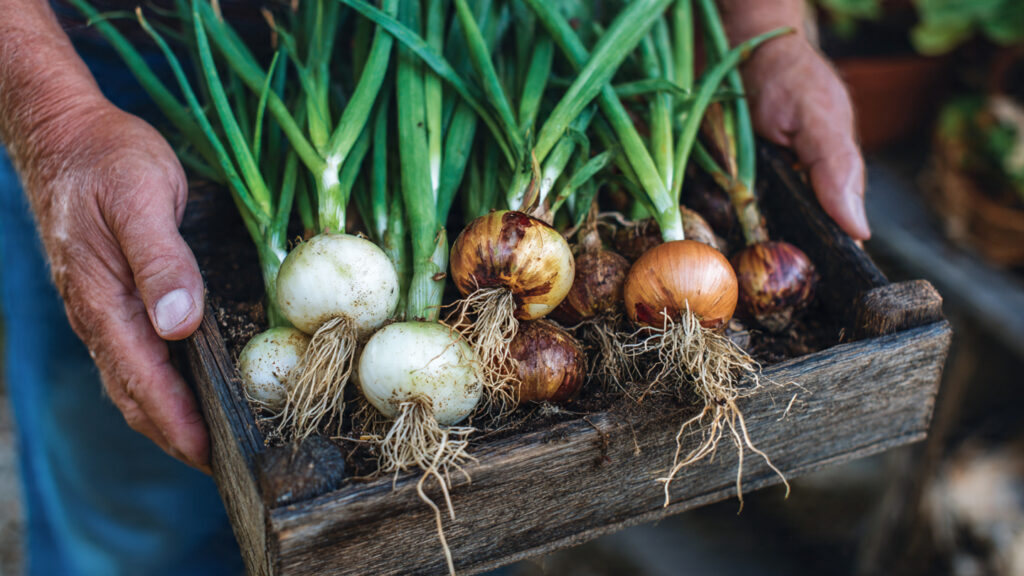
Onions are one of the most rewarding crops you can grow at home. They’re versatile in the kitchen, easy to store, and surprisingly simple to cultivate once you understand their basic needs. Whether you have a large backyard garden or a few containers on a sunny balcony, you can grow plump, flavorful onions with the right techniques.
This complete guide will walk you through everything you need to know—from choosing the right variety to harvesting and storing your onions for months of use.
Why Grow Your Own Onions?
Homegrown onions offer several advantages over store-bought ones:
- Better flavor – Freshly harvested onions have a stronger, sweeter taste.
- Chemical control – You know exactly what goes into your soil.
- Cost savings – A small investment in seeds or sets can yield dozens of bulbs.
- Long storage life – Properly cured onions can last for months.
Onions are also beginner-friendly and require minimal maintenance once established.
Understanding Onion Types
Before planting, it’s important to understand the different types of onions. They are categorized mainly by how they respond to daylight:
1. Short-Day Onions
These begin forming bulbs when daylight reaches 10–12 hours. They are ideal for warmer regions with mild winters.
2. Long-Day Onions
These require 14–16 hours of daylight to form bulbs and are best suited for cooler climates.
3. Intermediate (Day-Neutral) Onions
These adapt to a range of day lengths and are suitable for many growing zones.
Choosing the correct type for your region ensures proper bulb development and larger harvests.
Choosing Between Seeds, Sets, and Transplants
You can grow onions in three main ways:
1. Seeds
- Most economical option.
- Wider variety selection.
- Requires more time (start indoors 8–10 weeks before transplanting).
2. Onion Sets
- Small, immature bulbs grown the previous season.
- Quick and easy for beginners.
- Less variety available but faster results.
3. Transplants
- Young plants ready for garden planting.
- Good balance between convenience and variety.
For beginners, onion sets are often the easiest starting point.
Preparing the Soil for Success
Onions thrive in loose, well-draining, nutrient-rich soil. Since they have shallow roots, soil preparation is crucial.
Soil Requirements:
- pH between 6.0 and 7.0
- Rich in organic matter
- Free from large stones and clumps
Steps to Prepare:
- Loosen soil 8–10 inches deep.
- Mix in compost or well-rotted manure.
- Remove weeds and debris.
- Level the surface before planting.
Avoid compacted soil, as it restricts bulb growth and causes misshapen onions.
Planting Onions the Right Way
When to Plant
- Plant in early spring as soon as the soil is workable.
- In warmer climates, plant in late fall for a winter harvest.
Spacing Matters
- Space plants 4–6 inches apart.
- Keep rows about 12 inches apart.
- Plant sets about 1 inch deep, with the tip just above soil level.
Proper spacing ensures good air circulation and larger bulb development.
Watering: The Key to Bulb Formation
Onions need consistent moisture, especially during bulb formation.
➡️ How to Grow Malabar Spinach from Cuttings for Fast, Easy Greens
➡️ How to Grow Super Delicious Cabbage at Home Without a Garden
➡️ How to Grow Bean Sprouts at Home in Plastic Bottles Easily (Step‑by‑Step Guide)
➡️ Why is Your Lemon Tree Blooming in the Heart of Winter?
➡️ Why Should Your Garden Have a Dedicated Pollinator Highway?
➡️ Why Do Your Fruit Trees Need a Winter Wash to Thrive in Spring?
➡️ How Can Rice Water Transform Your Fruits into Sweeter Delights?
➡️ Jumpstart Your Winter Garden: Seed Starting Under Lights
- Provide about 1 inch of water per week.
- Water deeply but avoid waterlogging.
- Reduce watering when tops begin to yellow before harvest.
Uneven watering can result in small bulbs or splitting.
Feeding for Bigger Bulbs
Onions are heavy feeders, particularly in nitrogen during early growth.
Fertilizing Tips:
- Apply a balanced fertilizer at planting.
- Side-dress with nitrogen every 2–3 weeks until bulbs begin forming.
- Stop fertilizing once bulb swelling starts.
Too much nitrogen late in the season leads to large tops but small bulbs.
Weed Control: A Must for Success
Because onions have shallow roots, they compete poorly with weeds.
- Keep beds consistently weed-free.
- Use mulch like straw to suppress weeds.
- Avoid deep cultivation that disturbs roots.
Mulching also helps retain soil moisture and regulate temperature.
Common Onion Problems and How to Fix Them
1. Small Bulbs
Caused by:
- Crowding
- Poor soil
- Incorrect day-length variety
2. Bolting (Flowering Too Early)
Triggered by:
- Temperature fluctuations
- Plant stress
Solution:
Remove flowering stalks immediately to redirect energy.
3. Pests
Common pests include:
- Onion maggots
- Thrips
Prevent issues by:
- Rotating crops yearly
- Using insect netting if needed
Growing Onions in Containers
Limited space? No problem.
Container Requirements:
- At least 8–10 inches deep
- Good drainage holes
- Quality potting mix
Plant onions 3–4 inches apart in containers and place them in full sun (6–8 hours daily).
Container-grown onions require slightly more frequent watering but can produce excellent yields.
Harvesting at the Perfect Time
Knowing when to harvest is crucial.
Signs Your Onions Are Ready:
- Tops fall over naturally.
- Leaves turn yellow and begin drying.
Once 50–80% of tops have fallen, stop watering and allow bulbs to mature in the soil for about a week if weather permits.
Carefully lift onions using a garden fork. Avoid pulling directly by the tops to prevent damage.
Curing for Long-Term Storage
Curing helps onions develop their protective outer layer and improves shelf life.
How to Cure:
- Lay onions in a single layer in a warm, dry, well-ventilated area.
- Keep out of direct sunlight.
- Cure for 2–3 weeks until necks are fully dry.
After curing:
- Trim roots.
- Cut tops to about 1 inch.
- Store in mesh bags or baskets.
Properly cured onions can last 3–6 months or longer.
Storage Tips for Maximum Freshness
- Store in a cool (32–40°F), dry, and well-ventilated place.
- Avoid plastic bags.
- Keep away from potatoes (they release moisture and gases).
Check regularly and remove any soft or sprouting bulbs.
Pro Tips for Bigger, Better Harvests
- Rotate onion beds yearly to prevent disease.
- Avoid planting in freshly manured soil (causes rot).
- Start seeds early indoors for the longest growing season.
- Trim seedling tops to 3 inches before transplanting to strengthen stems.
- Practice succession planting for continuous harvests.
Final Thoughts
Growing onions like a pro doesn’t require complicated techniques—just attention to soil preparation, consistent watering, proper spacing, and timely harvesting. With the right variety and a little care, you can enjoy a generous harvest of flavorful, homegrown onions that last for months.
Whether you’re a beginner planting your first garden bed or an experienced gardener refining your skills, onions are a dependable crop that rewards patience and effort. Start small, follow these steps, and before long, you’ll be harvesting abundant bulbs that elevate every meal you prepare.